


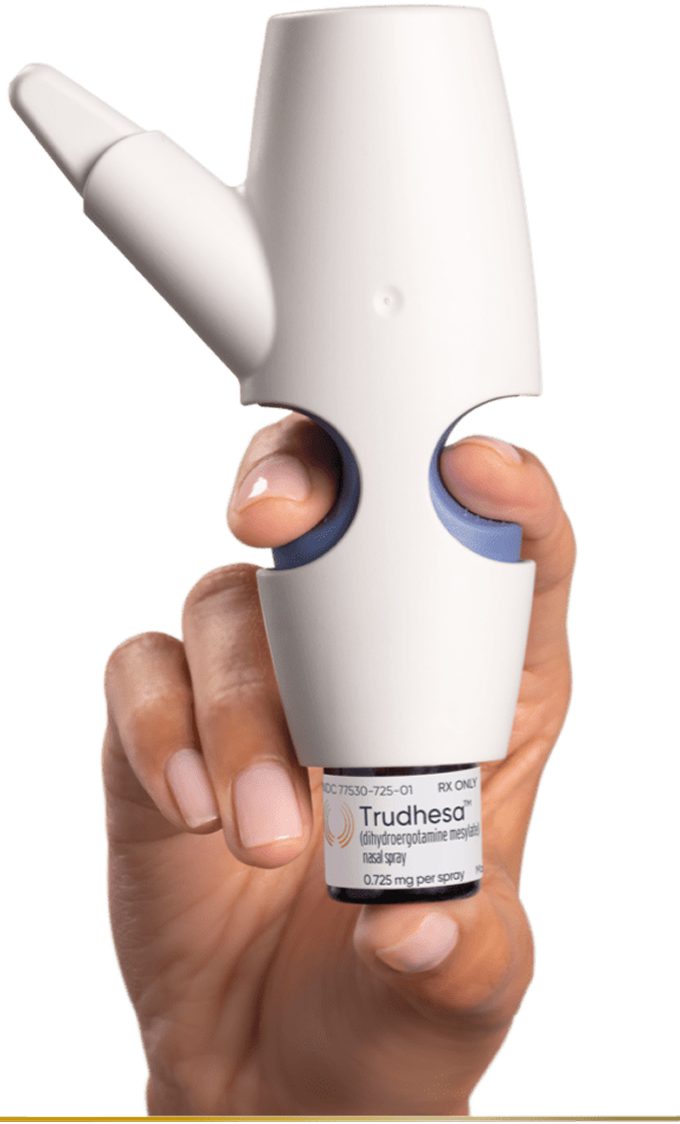
For the acute treatment of migraine in adults.
NOW AVAILABLE IN A 6-PACK
What is the Trudhesa Difference?
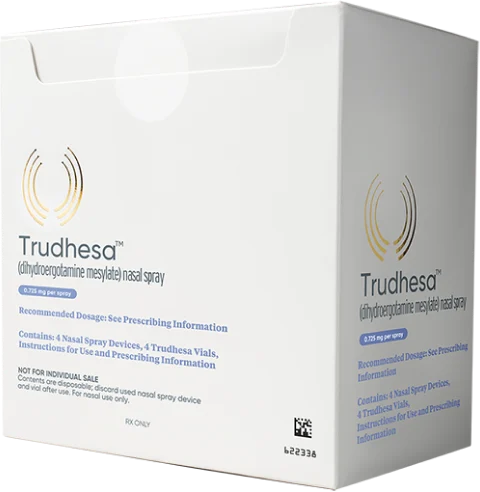
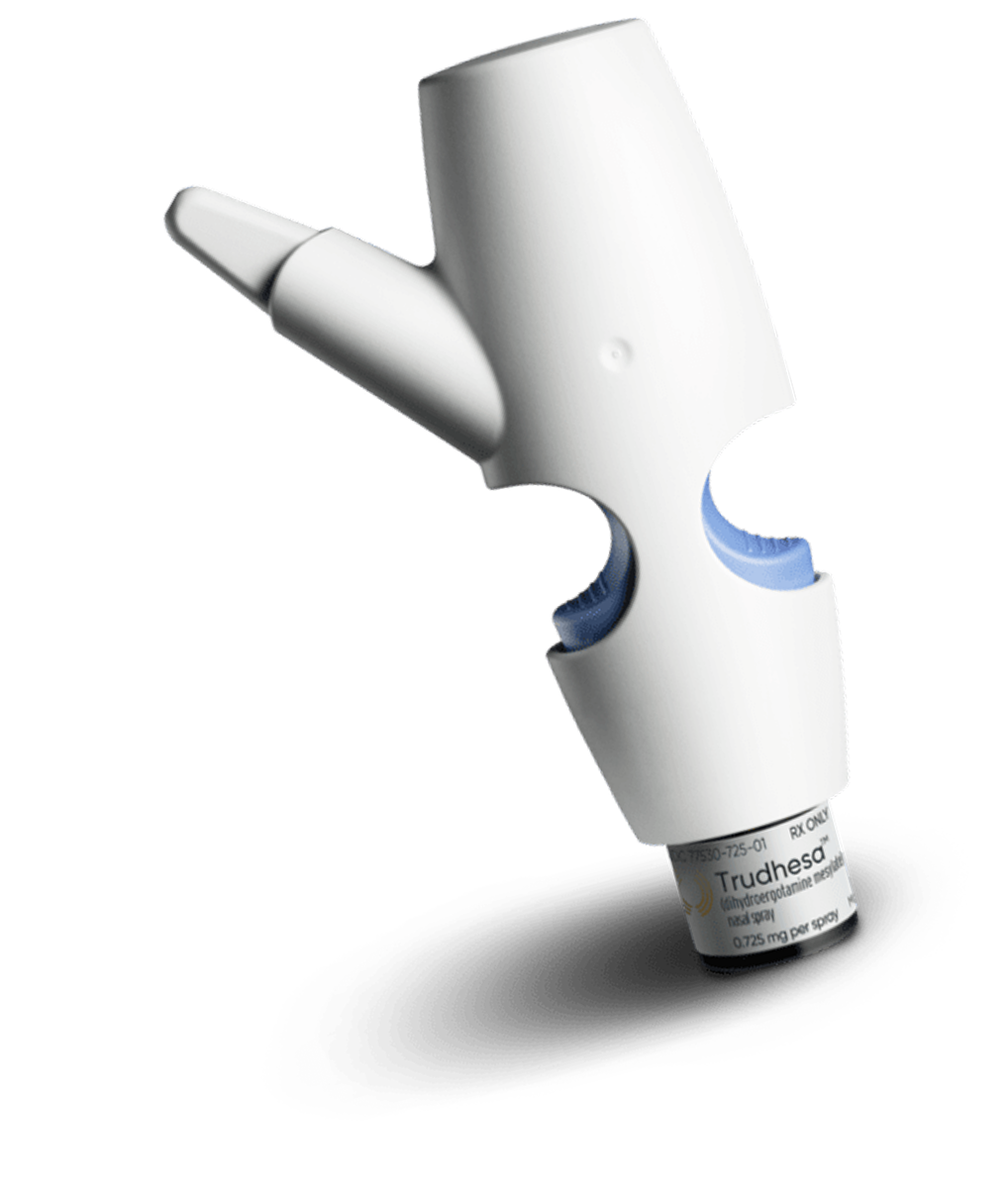
Trudhesa® is the only migraine treatment that uses advanced Precision Olfactory Delivery (POD®) technology to consistently deliver dihydroergotamine mesylate (DHE) to the vascular-rich upper nasal space.2-4
DHE for the treatment of migraine
has a 70+ year history of proven effectiveness.1,5,6
DHE is recommended as a “Level A” acute treatment by the AHS Guidelines.7,8

The efficacy of intravenous (IV) DHE is well-regarded by physicians because of its1,9:

In vitro studies show*:

*In vitro study data correlation to clinical outcomes are undetermined.

The efficacy of intravenous (IV) DHE is well-regarded by physicians because of its1,9:

In vitro studies show*:

*In vitro study data correlation to clinical outcomes are undetermined.

There’s nasal.
And then there’s upper nasal12.

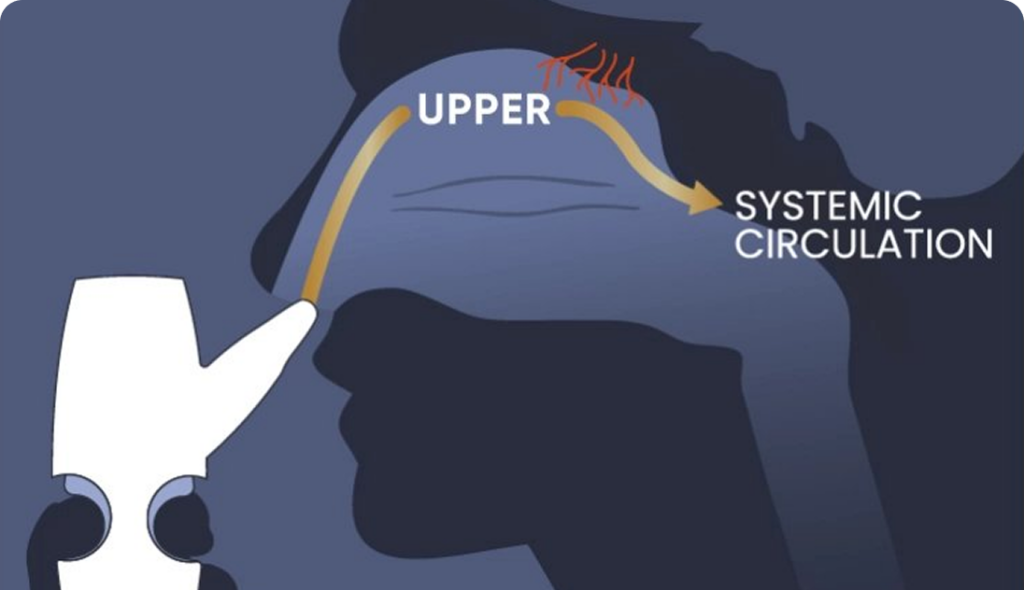
The upper nasal space is highly permeable and vascular-rich, providing increased bioavailability by3,4,13:

POD® technology
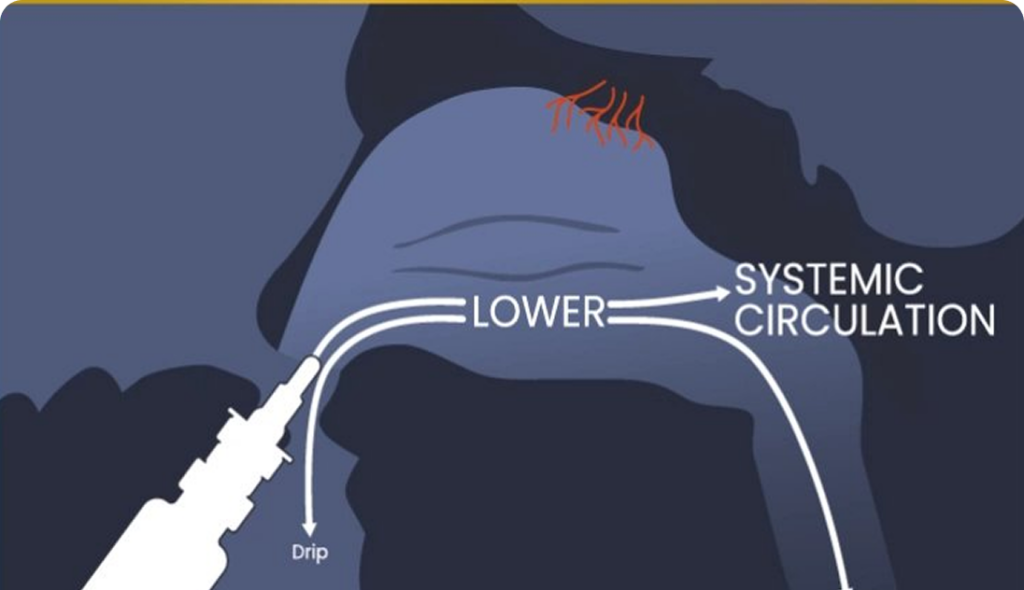
Traditional DHE nasal spray

POD technology.
Far from just a nasal spray.2

POD is manually actuated and propellant powered so coordinated inhaling is not needed.2-4,12

Watch Dr. Wade Cooper discuss the difference between treating migraine with POD® vs traditional nasal sprays.

Please follow complete Instructions for Use, provided with the product.

TITLE: How can we treat migraine effectively through the nose?

Wade Cooper, DO: As a neurologist, we talk about the brain all the time, but for today, I want to focus on how cool the nose is and why it’s an important delivery for migraine medication.

When we talk about nasal anatomy, it’s important to know that all areas of the nose aren’t the same. The top of the nose, the back of the nose is really rich in both venous and arterial access. This, of course, is important because when you put medication in the anterior vestibule of the nose, it’s not ideal for medication absorption.

When we look at the lower nasal space, that anterior vestibule of the nose, it’s just not designed for medication absorption. It’s got squamous epithelium that acts almost like a raincoat and won’t let medication penetrate.

Now, if we focus on the upper nasal space, you’ll notice that the actual cells are different. These are columnar epithelial cells, and they’ve got cilia on them. But what’s interesting is that the cilia in the top of the nose are non-motile, which means that they don’t have a beating-like wave to move medication away.

And in my opinion, this is the most ideal area to deliver medications because these columnar epithelial cells are covered with mucus and able to absorb medication best for any spot in the nose.

If you can get medication to the top of the nose, where these blood vessels are ready to absorb medication, you’re going to get your optimal effect.

When we talk about the upper nasal space and why it’s so ideal for our migraine patients, we know that the upper nasal space is designed for phenomenal medication absorption. But we also know that medications that go to the upper nasal space avoid first-pass phenomenon in the gut and avoid you going through the liver to metabolize the medication down, and therefore giving you lower side effect options. And the third part about this is that medications, when they’re delivered in the upper nasal space, are also going to allow you to get past gut slowdown, which occurs when people have their acute migraine attacks.

So we know that traditional nasal atomizers, has a puff of medicine that goes into the front of the nose in what we call the nasal vestibule. And the reason why that medicine can’t go to the top of the nose is because of the portion of the nose called the internal nasal valve. The internal nasal valve isn’t an actual structure, it’s more of a stricture in the nasal passages, but it stops typical aerosolized medications from getting to the upper nasal space.

This becomes a huge barrier for delivering medicines to the top of the nose. And the POD technology with Trudhesa gets medicine past this internal nasal valve and up to the target where it’s going to be best absorbed.

40% of patients do not respond to treatments like triptans and gepants that act on singular receptor types in the trigeminovascular system.24

3 key limitations of some pills and dissolvable tablets:
Slow onset of action

Trudhesa circumvents GI issues by rapidly and consistently delivering DHE to the vascular-rich upper nasal space and into systemic circulation.2,4,17

Limited dosing windows

Trudhesa can provide relief even when taken late into a migraine attack.1,3,9‡

†In a US study of 690 patients where 338 patients often avoid or delay taking migraine medication, common reasons for delaying treatment were waiting to see if it was a migraine attack, only want to take medication for a severe attack, and concerns about side effects.19


‡Based on a phase 3, open-label, safety study evaluating exploratory efficacy outcomes and post hoc analyses.3

Lack of consistency and sustained response

Migraine-associated GI issues may impact complete and consistent absorption of oral treatments.20-23

Trudhesa provides consistent delivery of proven long-lasting DHE, for sustained relief time after time.2-4

References: 1. Silberstein SD, Shrewsbury SB, Hoekman J. Dihydroergotamine (DHE) – then and now: a narrative review. Headache. 2020;60(1):40-57. 2. Trudhesa. Prescribing information. Impel Pharmaceuticals; 2021. 3. Smith TR, Winner P, Aurora SK, Jeleva M, Hocevar-Trnka J, Shrewsbury SB. STOP 301: a phase 3, open-label study of safety, tolerability, and exploratory efficacy of INP104, Precision Olfactory Delivery (POD®) of dihydroergotamine mesylate, over 24/52 weeks in acute treatment of migraine attacks in adult patients. Headache. 2021;61(8):1214-1226. 4. Shrewsbury SB, Jeleva M, Satterly KH, Lickliter J, Hoekman J. STOP 101: a phase 1, randomized, open-label, comparative bioavailability study of INP104, dihydroergotamine mesylate (DHE) administered intranasally by a I123 Precision Olfactory Delivery (POD®) Device, in healthy adult subjects. Headache. 2019;59(3):394-409. 5. US Food and Drug Administration. Drugs@FDA: FDA-Approved Drugs. https://www.accessdata.fda.gov/scripts/cder/daf/index.cfm. Accessed August 24, 2021. 6. Saper JR, Silberstein S, Dodick D, Rapoport A. DHE in the pharmacotherapy of migraine: potential for a larger role. Headache. 2006;46(suppl 4):S212-S220. 7. Marmura MJ, Silberstein SD, Schwedt TJ. The acute treatment of migraine in adults: The American Headache Society evidence assessment of migraine pharmacotherapies. Headache. 2015;55(1):3-20. 8. American Headache Society. The American Headache Society position statement on integrating new migraine treatments into clinical practice. Headache. 2019;59(1):1-18. Published correction appears in Headache. 2019;59(4):650-651. 9. Aurora SK, Ray S, Satterly K, Shrewsbury SB, Hoekman J. Does dihydroergotamine treat the “whole migraine”? Poster presented at: American Headache Society Virtual Annual Scientific Meeting, June 2020. 10. Lipton RB. Ergotamine tartrate and dihydroergotamine mesylate: safety profiles. Headache. 1997;37(suppl 1):S33-S41. 11. Saper JR, Silberstein SD. Pharmacology of dihydroergotamine and evidence for efficacy and safety in migraine. Headache. 2006;46(suppl 4):S171-S181. 12. Martin V, Hoekman J, Aurora SK, Shrewsbury SB. Nasal delivery of acute medications for migraine: the upper versus lower nasal space. J Clin Med. 2021;10(11):2468. 13. Data on File. Impel Pharmaceuticals. 2020. 14. Aurora SK, Shrewsbury SB, Ray S, Hindiyeh N, Nguyen L. A link between gastrointestinal disorders and migraine: insights into the gut-brain connection. Headache. 2021;61(4):576-589. 15. Lipton RB, Munjal S, Buse DC, et al. Unmet acute treatment needs from the 2017 Migraine in America Symptoms and Treatment Study. Headache. 2019;59(8):1310-1323. 16. Axert. Prescribing information. Janssen Pharmaceuticals; 2017. 17. Aurora SK, Papapetropoulos, Kori S. Gastric stasis in migraineurs: etiology, characteristics, and clinical and therapeutic implication. Cephalalgia. 2013;33(6):408-415. 18. Lantéri-Minet M, Mick G, Allaf B. Early dosing and efficacy of triptans in acute migraine treatment: the TEMPO study. Cephalalgia. 2012;32(3):226-235. 19. Foley KA, Cady R, Martin V, et al. Treating early versus treating mild: timing of migraine prescription medications among patients with diagnosed migraine. Headache. 2005;45(5):538-545. 20. Láinez MJ, García-Casado A, Gascón F. Optimal management of severe nausea and vomiting in migraine: improving patient outcomes. Patient Relat Outcome Meas. 2013;4:61-73. 21. Dodick DW, Lipton RB, Ailani J, et al. Ubrogepant for the treatment of migraine. N Engl J Med. 2019;381(23):2230-2241. 22. Croop R, Goadsby PJ, Stock DA, et al. Efficacy, safety, and tolerability of rimegepant orally disintegrating tablet for the acute treatment of migraine: a randomised, phase 3, double-blind, placebo-controlled trial. Lancet. 2019;394(10200):737-745. 23. Diener HC, Tassorelli C, Dodick DW, et al; International Headache Society Clinical Trials Standing Committee. Guidelines of the International Headache Society for controlled trials of acute treatment of migraine attacks in adults: Fourth edition. Cephalalgia. 2019;39(6):687-710. 24. Barbanti P, Egeo G, Mitsikostas DD. Trigeminal-targeted treatments in migraine: is 60% the magic number? Headache. 2019;59:1659-1661.